Investor Data Room Guide for Startup Fundraising
Table of Contents
- Investor Data Room Basics for Startup Fundraising
- What Is an Investor Data Room?
- Startup Fundraising Documents to Include in an Investor Data Room
- How to Organize a Data Room for Investors
- Protecting Investor Data Room Access
- When Revdoku Works as a Startup Investor Data Room
- Revdoku, Cloud Storage, or a Dedicated VDR?
- Four Startup Investor Data Room Examples
- Common Investor Data Room Mistakes During Due Diligence
- Final Thoughts on Choosing an Investor Data Room
- Investor Data Room Basics for Startup Fundraising
- What Is an Investor Data Room?
- Startup Fundraising Documents to Include in an Investor Data Room
- How to Organize a Data Room for Investors
- Protecting Investor Data Room Access
- When Revdoku Works as a Startup Investor Data Room
- Revdoku, Cloud Storage, or a Dedicated VDR?
- Four Startup Investor Data Room Examples
- Common Investor Data Room Mistakes During Due Diligence
- Final Thoughts on Choosing an Investor Data Room
Investor Data Room Basics for Startup Fundraising
An investor data room turns early interest into due diligence, helping investors decide whether your pitch-deck claims survive inspection.
Speed matters: DocSend reports investors spend an average of just two minutes and 42 seconds reviewing a pitch deck. A clear startup investor data room moves interested investors from the story to the evidence without another email.
This guide covers:
- What a data room for investors should contain
- How to organize and protect sensitive documents
- When Revdoku works as a lightweight protected room
- When a dedicated virtual data room is the safer choice
TL;DR: Make investor due diligence easier without exposing more information than the deal requires.
What Is an Investor Data Room?
An investor data room is a controlled online collection of company documents for fundraising and due diligence, usually including financial records, corporate documents, ownership information, customer evidence, and support for pitch claims.
Carta describes virtual data rooms as secure exchanges for confidential information during fundraising, M&A, IPOs, and audits, with permissions that let investors review sensitive material without compromising its integrity.
Early-stage founders usually need less than an M&A deal room. Carta explains the broader data room model here.
Pitch decks and investor data rooms serve different purposes:
| Resource | Main Purpose | Typical Contents | When It Is Shared |
|---|---|---|---|
| Pitch deck | Earn attention and a meeting | Problem, product, market, traction, team, ask | During outreach |
| Investor data room | Support startup due diligence | Financials, cap table, contracts, metrics, legal records | After genuine interest |
| Dedicated VDR | Control a complex or regulated transaction | Large document sets with granular permissions and formal audit records | Advanced diligence, M&A, or regulated deals |
A good startup investor data room is curated, not a dump of every company file.
Startup Fundraising Documents to Include in an Investor Data Room
Match contents to company stage and investor interest. A pre-seed company may provide forecasts and customer interviews, while investors will expect a Series A company to provide historical financials, cohort data, employment records, and signed commercial agreements.
Investors usually request these startup fundraising documents:
| Folder | Documents to Include | What Investors Are Checking |
|---|---|---|
| 00 Start Here | Index, company summary, fundraising timeline, contact details | Whether the room is current and easy to move through |
| 01 Corporate | Formation documents, bylaws, board approvals, subsidiary details | Whether the company was formed and governed correctly |
| 02 Ownership | Current cap table, SAFEs, notes, option plan, prior financing documents | Dilution, investor rights, and ownership accuracy |
| 03 Financials | Income statement, balance sheet, cash flow, budget, forecast, runway model | Burn rate, assumptions, and capital needs |
| 04 Commercial | Customer list, revenue breakdown, pipeline, major contracts, churn data | Revenue quality and customer concentration |
| 05 Product and IP | Product roadmap, architecture summary, patents, trademarks, IP assignments | Defensibility and ownership of the product |
| 06 Team | Organization chart, founder biographies, employment and contractor templates | Hiring risk and whether IP was assigned correctly |
| 07 Fundraise | Pitch deck, use of funds, proposed round terms, milestone plan | What the new capital is expected to achieve |
Never upload raw passwords, private encryption keys, full payment-card data, or unnecessary personal information. Unless an authorized reviewer genuinely needs them, redact bank details, home addresses, and customer data. Ask counsel before sharing privileged legal advice or confidentiality-restricted documents.
The best investor data room answers likely questions without material that adds risk but not decision value.
How to Organize a Data Room for Investors
Build the first investor data room before outreach; waiting for a request causes delays and risks sending the wrong version.
Use this sequence:
-
Create a short index. List each folder, its purpose, owner, and last review date. Put the index first so investors know where to begin.
-
Separate the pitch from diligence. Keep the teaser deck easy to open and financial, legal, customer, and ownership records behind a stronger gate.
-
Use predictable names.
2026-06-management-accounts.pdfis clearer thanfinancials-final-v7.pdf. Where relevant, include the period, subject, and version date. -
Make the numbers agree. Keep revenue, headcount, runway, and market claims consistent across the deck, forecast, cap table, and operating plan. Note legitimate differences instead of hoping nobody notices.
-
Assign a document owner. The finance lead might own forecasts and counsel incorporation records, but one person should oversee the full room and remove duplicates.
-
Test the investor view. Open the link in a private browser window and check every gate, file, folder, download setting, and contact form. During diligence, a broken link feels larger than the underlying technical problem.
For a small company, review the room weekly during an active raise and monthly otherwise.
Protecting Investor Data Room Access
Expand access as the relationship deepens. NIST defines least privilege as limiting users to the minimum access needed for an assigned task. In fundraising, accepting an introductory call does not entitle someone to payroll records or every customer contract. See the NIST definition of least privilege.
Use staged disclosure:
| Fundraising Stage | Reasonable Material to Share | Material Commonly Held Back | Suggested Control |
|---|---|---|---|
| Cold outreach | Teaser or pitch deck | Customer names, detailed financial model, legal records | Public or email-gated deck |
| First meetings | Deck, product demo, selected metrics | Full contracts, employee data, privileged advice | Email gate or password |
| Active diligence | Financials, cap table, corporate records, material contracts | Unrequested personal or privileged information | Protected investor data room |
| Legal review | Requested transaction and legal documents | Anything outside the agreed diligence scope | Dedicated VDR when formal controls are required |
Send passwords separately. When a process ends, remove access and record what was shared. If firms need different information, create separate rooms or links; one shared URL may not suit every audience.
IBM’s 2025 study reported a $4.44 million global average breach cost. This does not predict a small startup’s breach cost, but shows why sensitive data needs deliberate controls. Read IBM’s 2025 findings.
When Revdoku Works as a Startup Investor Data Room
Revdoku can serve as a lightweight investor data room for fast, controlled sharing without enterprise deal-room complexity. From the dashboard, drag in a PDF or folder, place it in a private bucket, and share a stable live link.
A practical Revdoku workflow:
- Create a fundraise bucket and upload the organized folders.
- Use a public link only for safe-to-circulate material, such as a teaser deck.
- Protect diligence material with a password or visitor email gate.
- Review protected-link open notifications and per-visitor activity: pages viewed, clicks, and downloads.
- Replace outdated bucket material without changing the link, so investors need not search for a newer email.
Captured leads identify visitors using an email gate, while built-in feedback and contact forms let investors ask questions without a separate backend. Analytics can guide timing: if someone revisits the financial model before a partner meeting, a concise follow-up may help. Treat activity as context, not proof of investment.
Manual upload is the default; AI agents, the API, and CLI can automate repeated publishing once the basic room works.
Revdoku is controlled sharing, not a legal-grade VDR. Let that distinction guide the choice.
Revdoku, Cloud Storage, or a Dedicated VDR?
Choose by transaction sensitivity and complexity, not company size: a small regulated deal may need tighter controls than a larger, straightforward seed round.
| Capability | Shared Cloud Folder | Revdoku | Dedicated VDR |
|---|---|---|---|
| Fast setup | Usually | Yes | Varies |
| Stable live sharing link | Varies | Yes | Usually |
| Password or email gating | Varies | Yes | Usually |
| Open notifications and visitor analytics | Limited or plan-dependent | Yes | Usually |
| Lead capture and contact forms | Rare | Yes | Rare or product-dependent |
| Granular permissions by user, role, or file | Product-dependent | Not its purpose | Yes |
| Dynamic watermarking and DRM | Rare | No | Often |
| Legal-grade audit trail | Limited | No | Often |
| Enterprise compliance workflows | Product-dependent | Not positioned as a VDR | Usually the intended use |
Use Revdoku for a clear startup investor data room with protected access, engagement signals, feedback, and easy updates at one link.
Choose a dedicated virtual data room when the team needs:
- Granular user, role, folder, or file permissions
- Dynamic watermarking tied to the viewer
- Digital rights management or strict print, copy, and download controls
- Tamper-resistant or legal-grade audit trails
- Formal retention, discovery, or enterprise compliance processes
- Complex M&A, regulated financing, or multiple bidding parties
Tidy folder names cannot replace controls expressly required by a transaction, regulator, insurer, or legal team.
Four Startup Investor Data Room Examples
These scenarios show how room scope changes by deal.
-
A pre-seed software founder shares a Verified Email deck after a warm introduction, then sends a protected Revdoku bucket after the first meeting. It contains the cap table, incorporation records, 18-month forecast, customer interview summary, and product demo; an open notification helps the founder wait until the verified address has accessed it before following up.
-
A small agency launching a product spinout must explain which contracts, code, and trademarks belong to the new company. Its room includes IP assignments, contractor agreements, the new entity’s cap table, and a shared-services schedule; the founders ask counsel to review ownership documents before publication.
-
A hardware startup with sensitive supplier terms shares a unit-economics summary early but withholds named supplier agreements until active diligence. When access must vary by person and document, it moves legal review to a dedicated VDR with granular permissions and watermarking.
-
An AI agent builder raising a small seed round uploads product documentation, benchmark results, security notes, and a live demo to Revdoku, updating benchmark files at the existing link after each release. An API or CLI workflow can later publish repeated updates while investors retain the same simple room experience.
Disclose enough to support the decision, then add sensitive material as trust builds and diligence progresses.
Common Investor Data Room Mistakes During Due Diligence
Most problems stem from poor organization, inconsistent information, or mismatched tools and risk.
| Mistake | What Goes Wrong | Better Approach |
|---|---|---|
| Uploading every internal file | Investors waste time and sensitive data spreads | Organize documents around likely diligence questions |
| Mixing drafts and approved files | Reviewers cannot tell which number is current | Keep one current version and use dated filenames |
| Sending a new link after every update | Investors continue opening old copies | Update material behind a stable live link |
| Sharing one room with everyone | Each visitor may receive more access than needed | Use staged rooms, buckets, or a dedicated VDR |
| Reading too much into analytics | A long view is mistaken for investment intent | Use activity to improve timing, then ask direct questions |
| Choosing convenience over required controls | The room fails legal or compliance review | Confirm requirements with counsel before sharing |
There is no universal time to open the room: a deck can go out during outreach, while detailed records usually follow credible interest or a diligence request. Some founders seek an NDA before sharing sensitive IP, but many institutional investors resist signing one initially; the choice depends on the material, bargaining position, and legal advice.
A data room needs an internal owner who checks access, dates, consistency, and investor questions, even if others write the documents.
Final Thoughts on Choosing an Investor Data Room
A useful investor data room:
- Gives investors a clear route from the pitch to supporting evidence
- Limits disclosure according to the stage of the relationship
- Keeps current documents available at a dependable link
- Uses controls that match the legal and commercial risk
For an early-stage raise, Revdoku provides a protected room with drag-and-drop publishing, separate Password or Verified Email access, open notifications, visitor analytics, lead capture, and built-in feedback, while keeping setup light and automation optional.
If your deal requires granular permissions, watermarking, DRM, formal audit evidence, or enterprise compliance, use a dedicated VDR. The best investor data room helps the right investor find the right evidence without exposing everything else, regardless of file count.
Frequently asked questions
When should I share my investor data room?
Share a pitch deck during outreach, then provide broader data-room access after an investor shows credible interest or begins diligence. Release sensitive financial, legal, customer, and employee information in stages rather than granting full access immediately.
What should an early-stage startup include in its data room?
Start with formation documents, an accurate cap table, financial forecasts, fundraising terms, product or customer evidence, and relevant IP assignments. Include only current documents that support likely investor questions, adding more detailed records as the company and diligence process mature.
How often should I update the data room?
Review it weekly during an active fundraise and monthly when no process is underway. Replace outdated documents, check access settings, and confirm that figures remain consistent across the deck, forecast, cap table, and operating plan.
How can I protect sensitive information while supporting due diligence?
Apply least-privilege access by sharing only what each investor needs at the current stage. Use passwords or email gates, redact unnecessary personal and banking data, send passwords separately, and revoke access when discussions end.
Should investors sign an NDA before receiving access?
An NDA may be appropriate before sharing highly sensitive IP, supplier terms, or other restricted information. However, many institutional investors resist NDAs during initial conversations, so consider staged disclosure and consult counsel based on the material and your negotiating position.
When is Revdoku sufficient, and when is a dedicated VDR necessary?
Revdoku suits straightforward startup fundraising that needs protected links, easy updates, visitor activity, lead records, and feedback without enterprise complexity. Choose a dedicated VDR when the transaction requires granular permissions, viewer-specific watermarking, DRM, formal audit trails, or regulated compliance workflows.
How should I interpret investor activity analytics?
Use page views, downloads, and repeat visits as context for follow-up timing, not as proof that an investor intends to participate. A revisit to the financial model may justify a concise check-in, but direct conversation remains the reliable way to assess interest.
Related Articles
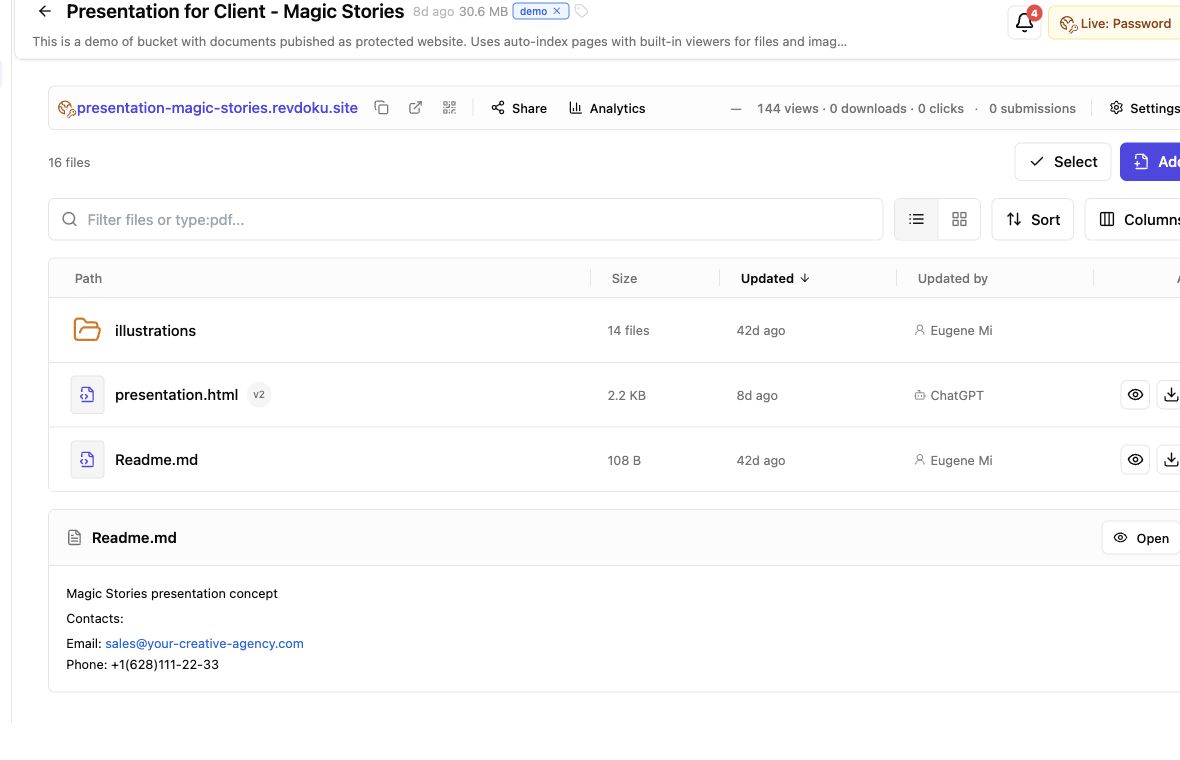
Client Deliverables Portal: Share Work in One Link
Share client files through one secure, stable link with browser viewing, access controls, feedback, analytics, and simple updates.
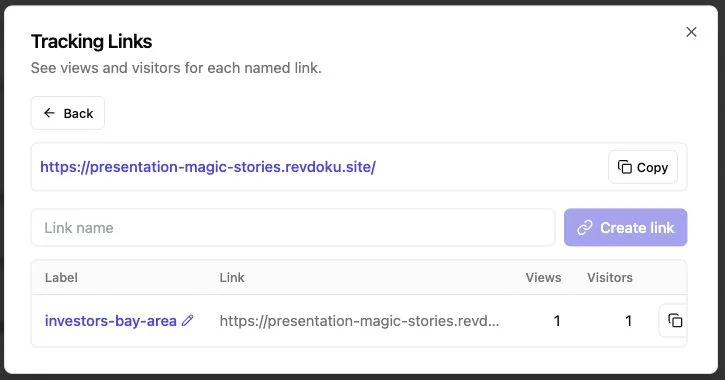
Data Room Checklist for Due Diligence
Build a secure, decision-ready data room with this checklist for corporate, financial, legal, IP, team, customer, and security records.
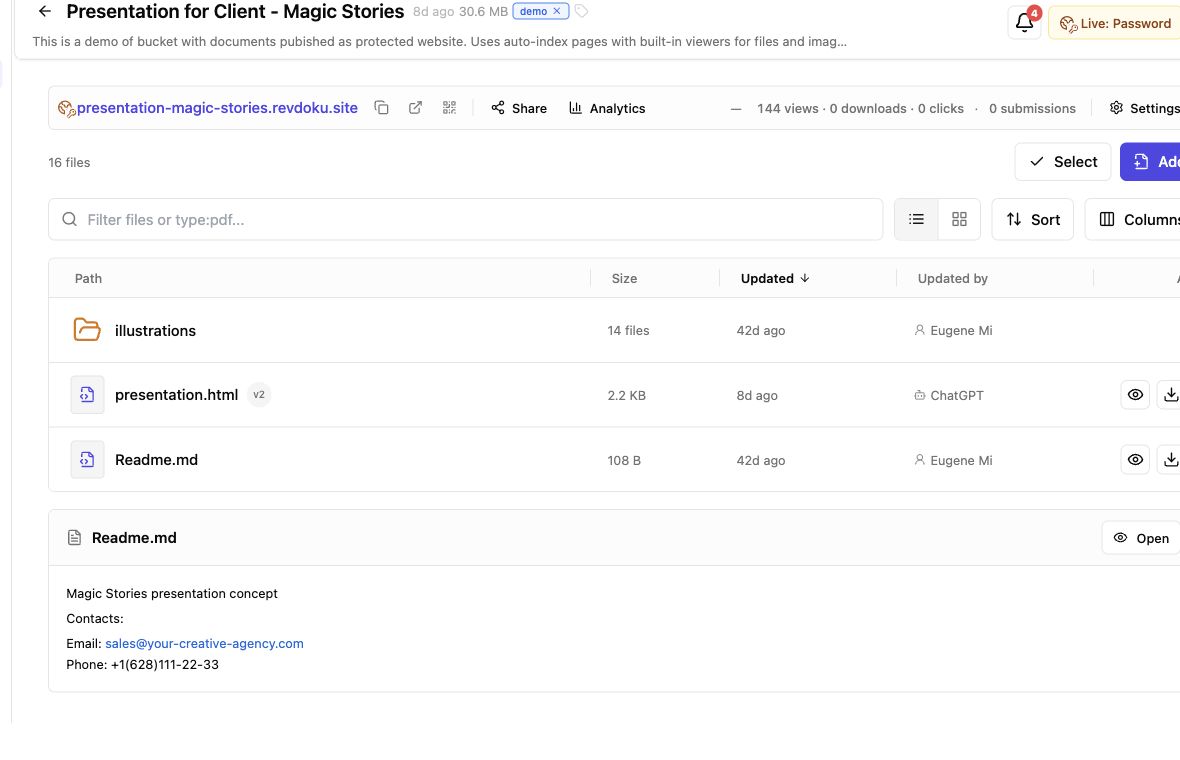
Fundraising Data Room: A Founder's Guide
Build a secure fundraising data room, stage investor access, organize due diligence files, track engagement, and prevent version chaos.