Webflow vs Claude Code for Landing Page Experiments
Webflow fits marketing teams that need a visual CMS, reusable components, editor permissions, and a managed website workflow. Claude Code fits teams that want to generate a custom page from a prompt, test a variant, and move on.
TL;DR: Webflow fits managed marketing sites, Claude Code fits fast custom variants, and Revdoku helps teams publish landing page variants. The question is: which workflow fits the experiment?
Note: Revdoku organizes generated landing pages as publishable buckets.
Webflow vs Claude Code: when Webflow is the better fit
Use Webflow when:
- The page belongs to a larger Webflow or Claude Code marketing site.
- Non-technical editors need to update content directly.
- The design system is already built in Webflow.
- You need CMS collections, forms, localization, or governance.
- The page will live for months or years.
Webflow gives teams structure when the site is an operating asset, not just an experiment.
When Claude Code is better for AI landing page experiments
Use Claude Code when:
- You need to test a page idea quickly.
- The experiment needs custom code, charts, calculators, animations, or generated assets.
- You want several variants without building CMS templates first.
- The test page is temporary.
- The team is comfortable reviewing generated code or static exports.
Claude Code is often faster for AI landing page experiments that are not yet permanent CMS content.
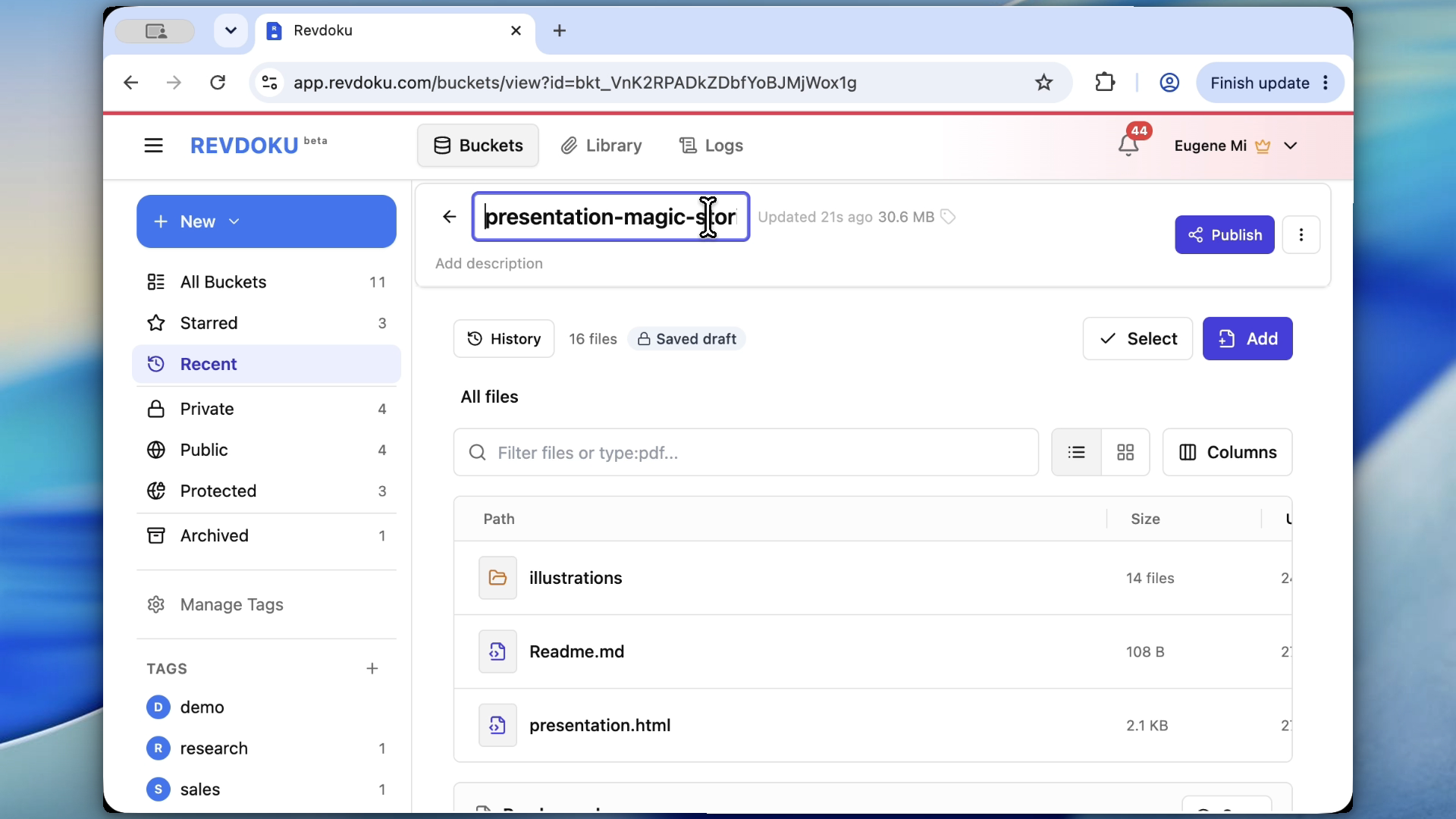
Note: tags keep fast AI-generated variants from becoming random links.
Where Revdoku landing pages fit
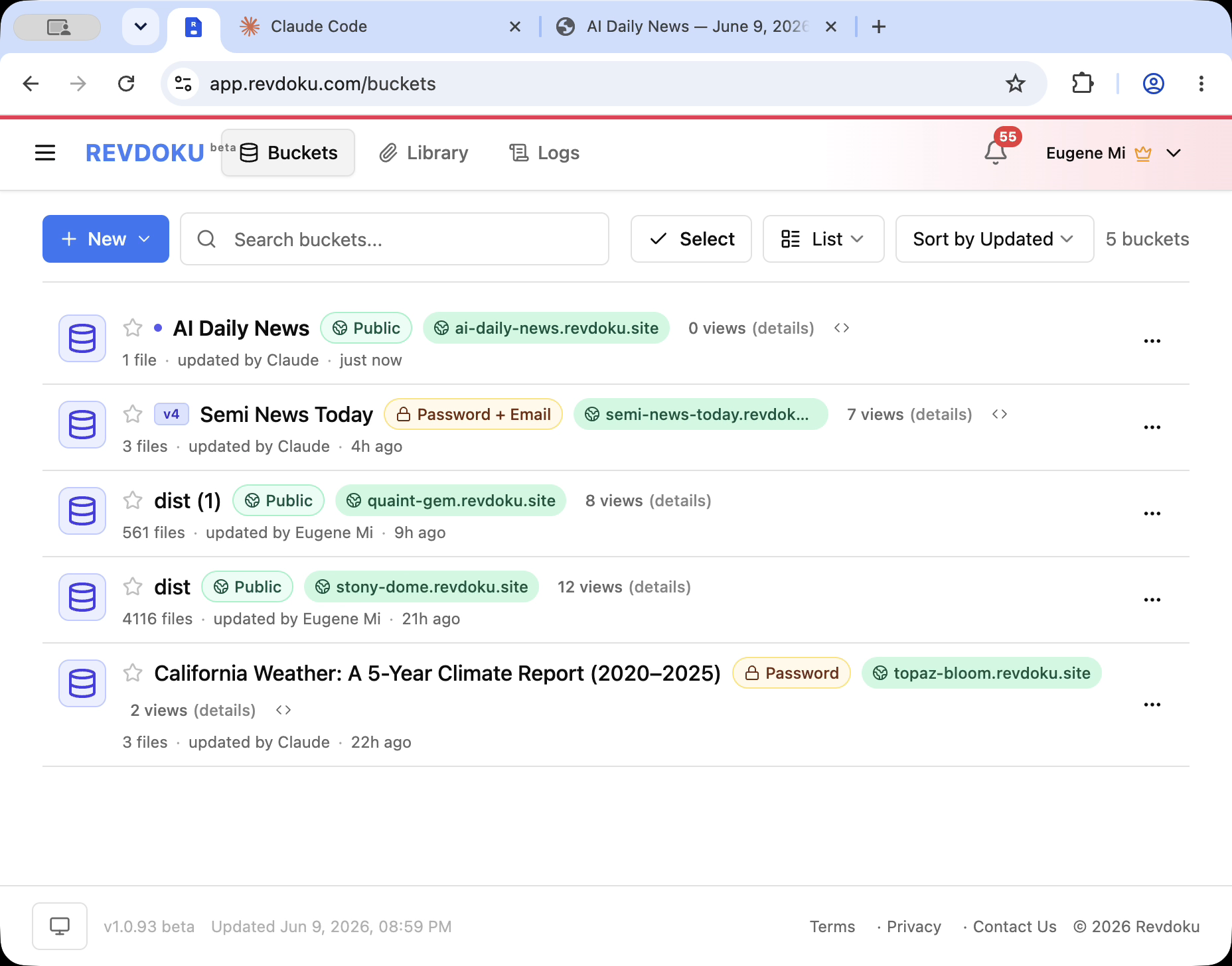
Revdoku is the lightweight publishing layer for AI-generated experiments: Claude Code generates the files, and Revdoku hosts them at a URL.
This helps when you want to test:
- A new hero angle.
- A pricing page variant.
- A segment-specific campaign page.
- A calculator or interactive demo.
- A landing page with generated media.
Upload the generated folder, publish it, share the link, and update the same bucket for new variants.
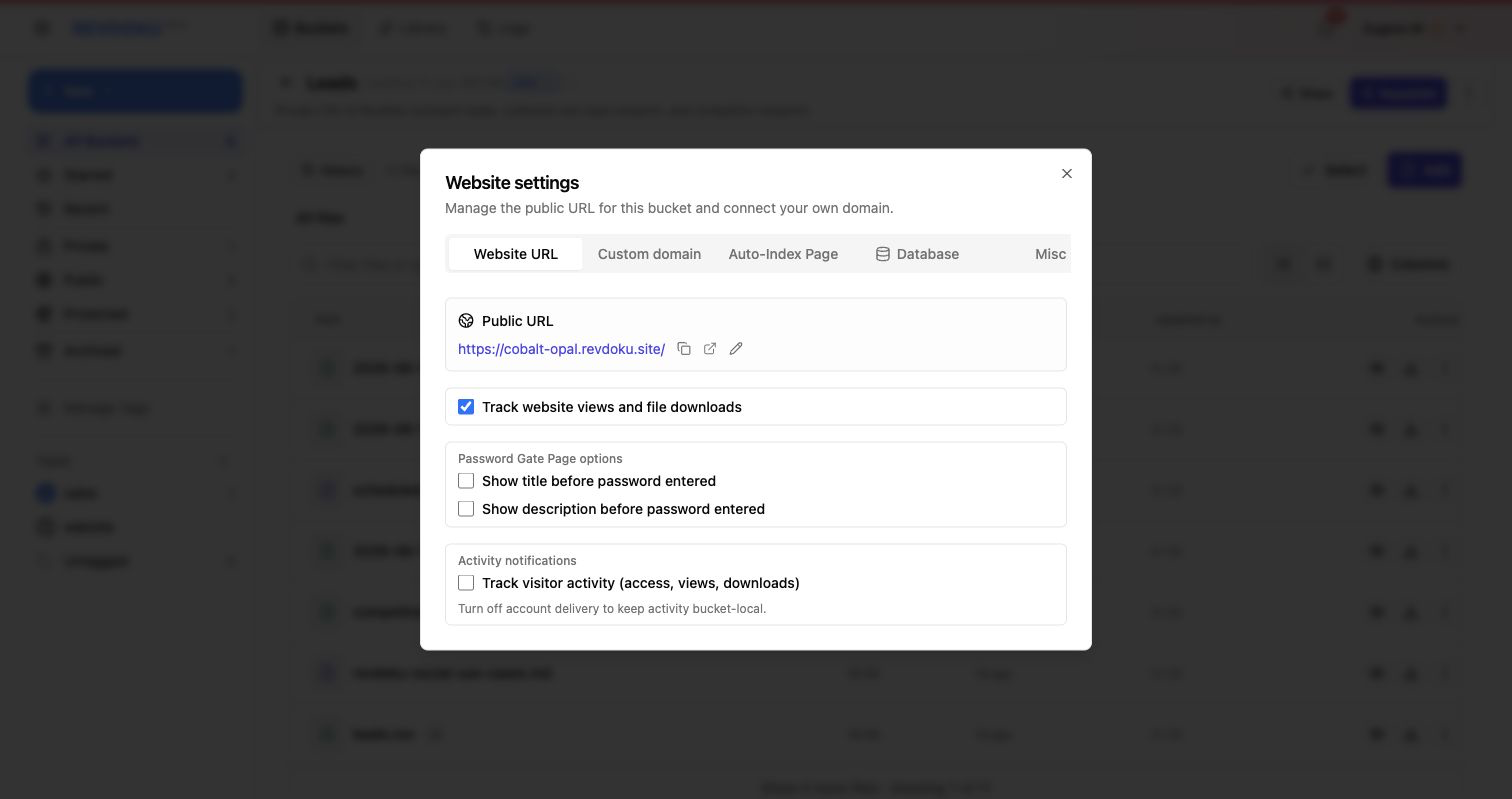
Note: use a clear URL for team or client review.
Keeping AI landing page experiments organized
A simple naming system prevents chaos:
landing-pages/
  q3-ai-agency-v1/
  q3-ai-agency-v2/
  q3-ai-agency-pricing-test/
  enterprise-demo-calculator/
In Revdoku, use bucket names and tags that match the campaign or experiment. Note the prompt or test hypothesis so the team remembers why the page exists.
Publishing without a full CMS seat
For small experiments, Revdoku avoids creating a new CMS page, assigning permissions, or wiring a deployment pipeline. The output can be just a static folder with index.html and assets.
That does not replace Webflow for the core site. It gives marketers a faster lane for Claude Code experiments.
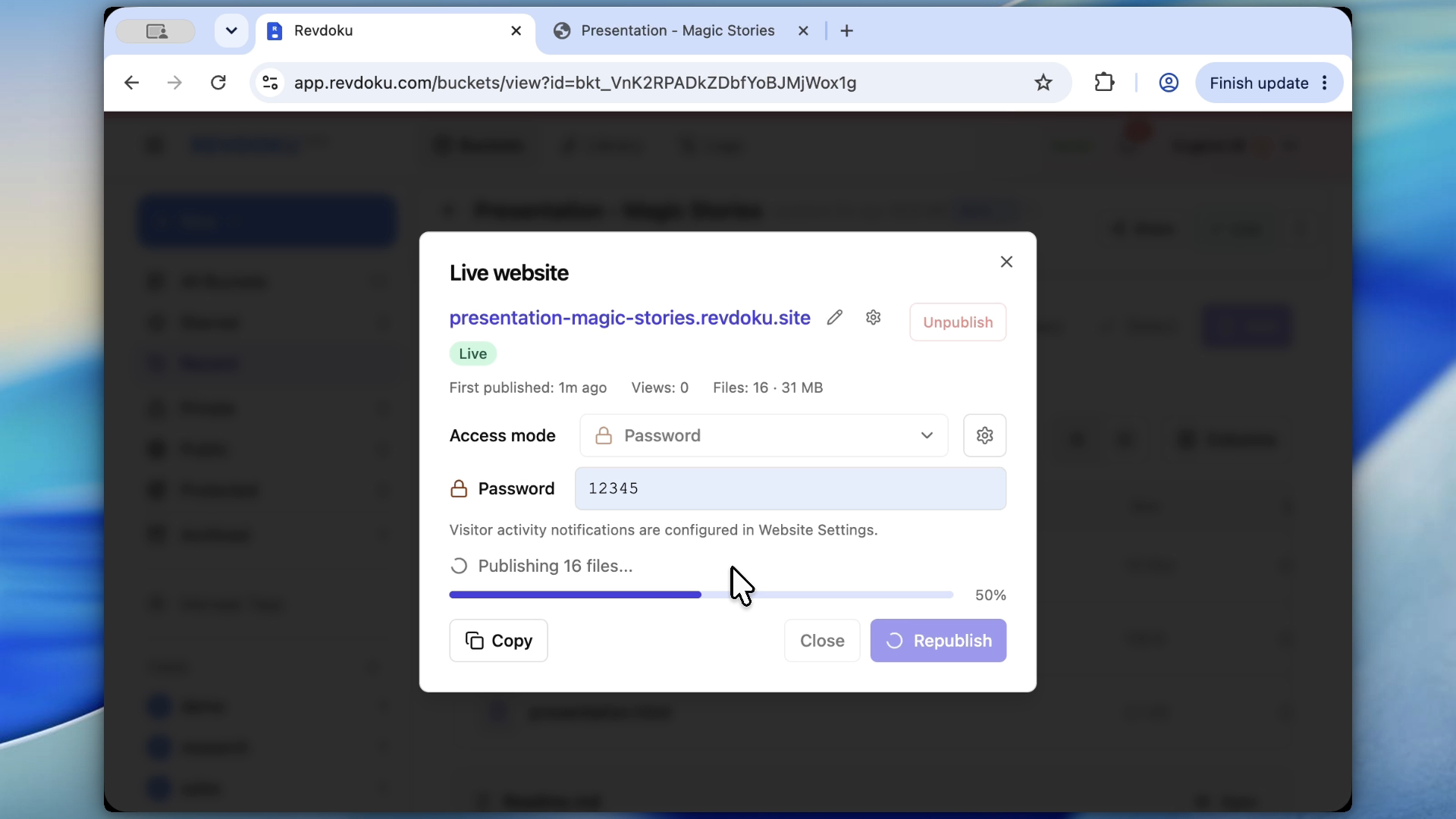
Note: protect experiment pages until the copy, claims, and layout have been reviewed.
Review and protect Revdoku landing pages
Before publishing a variant, use a password gate for internal review. When a stakeholder opens the page, Revdoku analytics can show visits and top paths.
If the test needs lead attribution, use password-plus-email for a controlled review group.
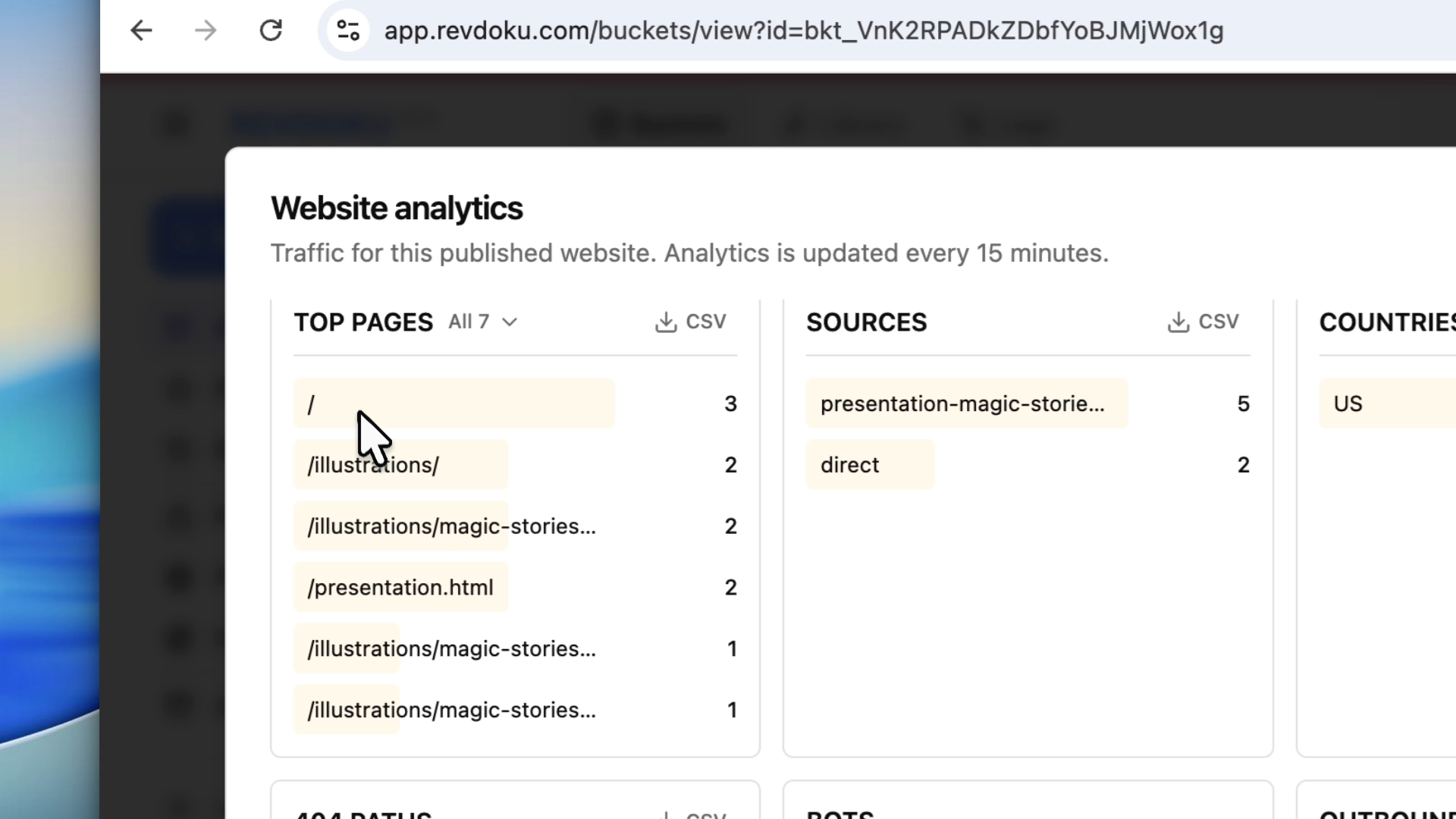
Note: analytics help decide whether a shared variant deserves another iteration.
Takeaway
Webflow is strong for managed marketing websites. Claude Code is strong for fast AI landing page experiments. Revdoku turns generated folders into live URLs, helping teams publish, protect, organize, and update landing page variants without making every experiment a full CMS project.
Frequently asked questions
When should a landing page experiment stay in Webflow?
Keep it in Webflow when the page is part of the main marketing site, needs CMS governance, or will be maintained over time. Webflow is better when non-technical editors need direct access and the page must follow an established design system.
When is Claude Code a better choice for landing page testing?
Claude Code is better when speed and flexibility matter more than long-term CMS structure. It works well for temporary variants, custom interactive elements, generated assets, or pages that need to be tested before becoming permanent site content.
Does Revdoku replace Webflow?
No. Revdoku is not meant to replace a managed Webflow site. It gives teams a faster way to publish and review AI-generated landing page experiments without turning every test into a full CMS project.
What should I upload to Revdoku for a landing page experiment?
In most cases, you can upload a static folder that includes an index.html file and its assets. The goal is to keep the experiment easy to publish, share, update, and retire when the test is finished.
How should teams organize multiple landing page variants?
Use clear bucket names, campaign tags, and version labels that match the experiment. It also helps to record the prompt, audience segment, or test hypothesis so the team understands why each variant exists.
Should experiment pages be password protected?
Yes, private review is useful before a page is shared publicly. Password protection gives stakeholders time to check the copy, claims, layout, and links before the page is used in a campaign.
How do analytics help with AI landing page experiments?
Analytics can show whether people are visiting the variant and which paths they view most. That information helps teams decide whether to iterate, publish a stronger version, or move the page into a more permanent workflow.
Related Articles

GitHub Pages Password Protection and Privacy
Learn why private repositories do not protect Pages sites and compare secure access options for internal teams and external clients.

How to Password Protect a Vercel Deployment
Learn how to secure Vercel deployments with password protection, authentication, trusted access, or protected Revdoku hosting.

How to Password Protect a Website Made with Claude
Learn how to export, secure, publish, and test a Claude-made website using password protection or verified-email access.