Essential Cover Letter Tips and Checklist
Table of Contents
You’ve polished your resume, researched the company, and found the ideal job opening. Then you dashed off a cover letter in twenty minutes and hit send.
That’s where most people blow it.
Hiring managers spend under thirty seconds scanning cover letters. They’re searching for reasons to reject you. A single typo can sink an otherwise perfect application. So can addressing the wrong company, which happens more often than you’d think when people copy from previous letters.
This cover letter tips checklist walks through fifteen specific things to verify before sending any job application. Some catch mistakes, while others ensure your letter adds value beyond your resume. Follow all fifteen to create a cover letter that uses those thirty seconds wisely.
Formatting Checks: Getting the Basics Right
The formatting checks catch the stuff that screams “I didn’t care enough to proofread.” These mistakes won’t impress anyone with your qualifications. They’ll just get you rejected before anyone reads past the first line.
Start with the recipient’s name. “Dear Hiring Manager” tells employers you couldn’t be bothered to find out who actually reads applications. Check the job posting first. If not, check the website or LinkedIn for roles like “Talent Acquisition Manager” or “HR Director.” If you can’t find a name after ten minutes of searching, “Dear [Department] Team” works better than the generic alternative.
Next, verify the company name and job title match exactly what’s in the posting. It’s an embarrassingly common mistake. Copying templates often leads to such errors. I’ve seen applications rejected solely because the candidate left the wrong company name in paragraph three. Read your letter out loud and confirm every mention of the company and role is correct to avoid cover letter mistakes.
Ensure your contact info matches your resume. Inconsistencies look sloppy. Date the letter with the day you’re sending it. Keep it to one page, no exceptions. If you’re running long, you’re probably repeating your resume instead of knowing what to include in a cover letter.
Use the same font as your resume for a cohesive look. Most people use something clean and readable like Arial, Calibri, or Times New Roman in 10-12 point size. Save your cover letter as a PDF unless otherwise specified. PDFs preserve your formatting across different devices and operating systems. Name the file professionally: FirstName-LastName-CoverLetter.pdf, not “cover letter final FINAL v3.pdf.”
Content Check: Your Opening Paragraph
Your first paragraph in a professional cover letter does two jobs. It tells the employer which position you’re applying for and where you found it. And it gives them a reason to keep reading instead of moving to the next application.
Specify the position in your opening sentence. “I’m writing to apply for the Senior Marketing Manager position posted on LinkedIn” works better than vague introductions. This helps employers who are hiring for multiple roles at once, and it shows you’re responding to a specific opening rather than blindly submitting applications.
Then add a hook. Not “I’m excited about this opportunity” (everyone writes that), but something specific about why this particular company interests you. Reference a recent product launch, a company value that connects with you, or an industry challenge they’re tackling. “I’ve been following ContentStack’s headless CMS development since the 2.0 release last year” tells me you know what the company does. “I’m passionate about marketing” tells me nothing.
The hook differentiates motivated candidates. According to a 2023 survey by ResumeLab, 68% of hiring managers said generic cover letters that could apply to any company were their biggest pet peeve. Your opening paragraph should make it impossible to swap in a different company name without rewriting the whole thing.
Avoid “My name is…” as your name is already visible. Don’t waste your opening sentence on information they already have. Start with something that makes them want to read the next sentence.
Content Check: The Body Tells What Your Resume Doesn’t
The body paragraphs are where most cover letter mistakes occur. Avoid treating them like a summary of your resume, listing previous jobs and responsibilities, as employers already have that. They don’t need you to repeat it in paragraph form.
Link specific experiences to job requirements. If they’re looking for someone with “experience managing cross-functional teams,” don’t just say “I have experience managing cross-functional teams.” Tell them about the time you coordinated product launches across engineering, design, and marketing departments. Explain what you learned, what went well, and what you’d do differently next time.
Add a relevant quantified achievement. Numbers make your claims concrete and credible. “I increased email open rates” is vague. “I increased email open rates from 18% to 31% over six months by putting in place A/B testing and audience segmentation” gives them something specific to evaluate. Pick achievements that match what this job needs you to accomplish.
Demonstrate knowledge of the company’s current situation. Read press releases, blogs, and social media. Then reference something specific: a market they’re expanding into, a challenge they’re facing, a new product line they launched. “I noticed your Q3 earnings report mentioned plans to expand into the European market” shows you did your homework. It also sets up an opportunity to explain how your experience relates to tehir goals.
A 2022 Jobvite study found personalized cover letters increase callback rates by 47% compared to generic ones. The difference isn’t small. Researching the company and refining your cover letter boosts your chances.
Content Check: Your Closing Paragraph
Your closing paragraph should do two things: include a clear call to action and signal your availability in line with job application tips. Don’t just give thanks and sign off. That’s passive. You want to move things forwrad.
“I’d welcome the opportunity to discuss how my experience in B2B content marketing could help ContentStack expand their European presence” is better than “Thank you for your time.” The first version resttaes your value proposition and suggests a next step. The second jus ends.
Mention your availability if it’s relevant. “I’m available for interviews any weekday afternoon” or “I can start two weeks after accepting an offer.” “I’m availaable any time, day or night, wheneve works for you” sounds desperate.
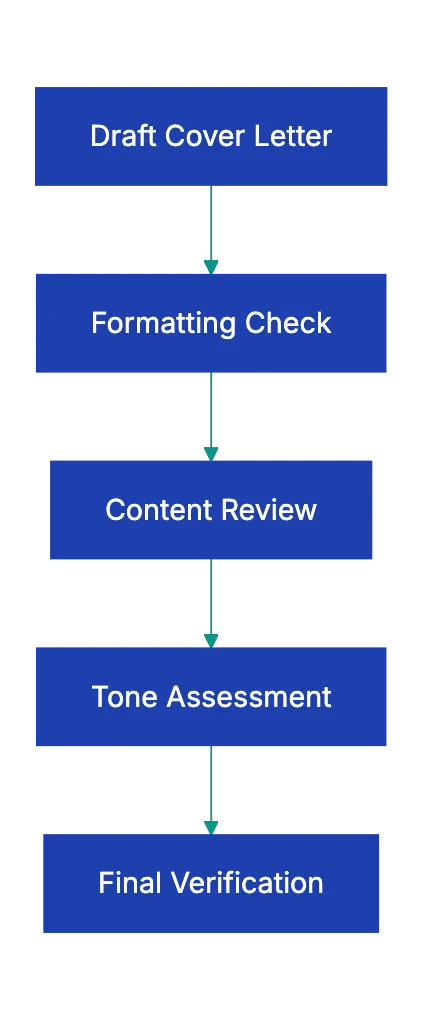
Cover Letter Review Process:
Keep the closing brief. Two to three sentences at most. Restate your interrest, reference a next step, thank them once. Then sttop writing.
Tone Checks: How You Sound Matters
Getting the toen righ is harder than getting the facts right. You want to sound professiona, but not stiff, confident, but not arrogant, enthusiastic, but not desperate. That’s a narrow raneg.
Read your letter out loud. If you sound like a robbot or lik you’re reading from a corporate handbook, you’re too formal. If you sound liie you’re texting a friend, you’re too casua. Aim for the tone you’d use introducing yourself to someoen senior at a professional conference: respectful, articulate, but still human.
Watch for desperation signals which can be a red flag in professional cover letters. “I would be so grateful for this opportunity” and “This job would mean everything to me” make emplloyers nervous. They want someone who wants the job, not someone who neeeds the job so badly they’ll accept anything. “I’m excited about the possibility of conrtibuting to ylur team” hits the righ note.
Be confiident without beign artogant. “I believe my five years of SaaS marketing experience woul be valuable to your team” works. “I’m the perfect candidate for htis role” raoses eyebrows. “I’m confidwnt I could excel in this position” is fine. “You’d be lukcy to have me” isn’t.
Make every sentence earn its place. If you can remove a sentence without losing any meaningful information, remove it. Hiring managers appreciate conciseness. They’re reading dozens of applications. Respect their time by cutting the fluff.
Red Flags That Kill Cover Letters
| Red Flag | Why It’s Fatal | How to Avoid It |
|---|---|---|
| Wrong company name | Shows you copied a template carelessly | Search your document for all company names before sending |
| Generic content | Suggests you’re mass-applying | Reference specific company details and job requirements |
| Resume repetition | Wastes the reader’s time | Tell stories your resume doesn’t, explain the “why” behind achievements |
| Grammatical errors | Signals poor attention to detail | Read out looud, use spell check, have someon else review |
| Negative language | Raises concerns about professionalism | Never badmouth previous employers or explain why you left badly |
| Excessive length | Shows you can’t communicate concisely | If it’s more than one page, cut it in half |
The wrong company name is especially deadly because it tells employers everything they need to know. You’re not actually interested in working for them specifically. You’re interested in working for anyone who’ll hire you. That’s not inherently bad, but you should never let them know it.
Generic content that could apply to any company in your industry has the same effect. When every sentence would work just as well in a letter to your competitor, you havven’t made a case for why you want this particular job. Employers can tel the difference between “I’m interested in marketing roles at tech copmanies” and “I’m interested in htis marketiing role at thi tech company.”
Grammatical errors and typos are unforgivable cover letter mistakes. You had time to proofread. You chose not to. That tells employers how you’ll handle important communication if they hire you. According to a CareerBuilder survey, 77% of hiring managers said they automatically eliminate candidates with typos in theri application materials. Spell check catches most errors, but not all. Read your letter backwards, sentenc by sentence, to catch mistakes your brain autocorrects when reading normally.
Never, ever include negative language aobut previous employers. “I’m looking to leave my current role because my manager micromanages everything” might be true, but it makes you sound diffficult. Employers assume you’ll eventually talk about them the same way. If you need to explain why you’re leaving a job, fovus on what you’re moving toward, not what you’re running from. “I’m looking for opportunities to take on more strategic responsibilities” beats “My current rloe is too tactical and boring.”
Quick Review: The Complete Checklist
Before you send any cover letter, run through this complete verification list:
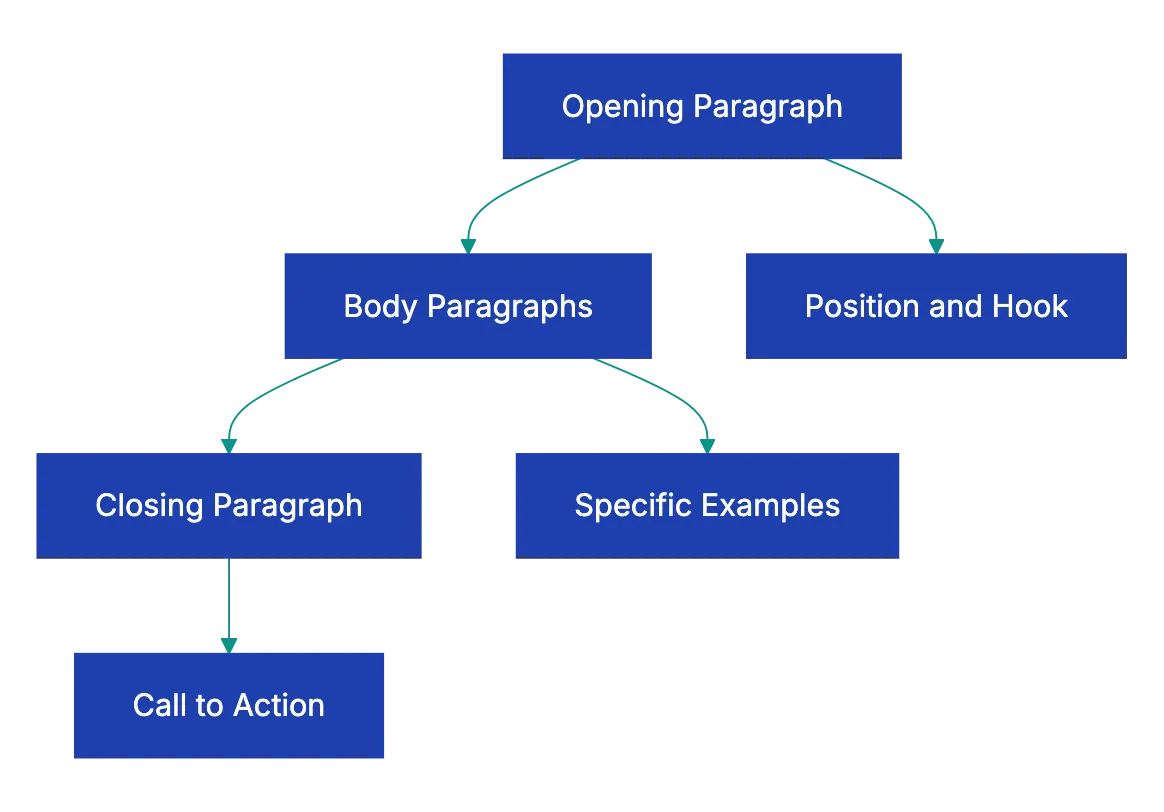
Cover Letter Structure Flow:
-
Recipient and addressing: a. Addressed to a specific person (not “Dear Hiring Manager”) b. Correct spelling of recipient’s name and title c. Proper company name throughout
-
Your information: a. Contact information matches your resume exactly b. Letter is dated with send date c. File named professionally
-
Format and presentation: a. One page maximum b. Same font as your resume c. Saved as PDF unless otherwise specified d. Clean readable layout with appropriate margins
-
Opening paragraph: a. States the specific position you’re applying for b. Mentions where you found the job posting c. Includes a specific hook about why this company interests you
-
Body content: a. Connects your specific experience to their specific requirements b. Includes at least one quantified achievement c. Demonstrates knowledge of the company’s current situation or goals d. Tells what your resume doesn’t
-
Closing paragraph: a. Includes a clear call to action b. Mentions your availability if relevant c. Keeps it brief and forward-looking
-
Tone and language: a. Professional, but conversational b. Confident, but not arrogant c. Enthusiastic, but not desperate d. Concise with no filler sentences e. No negative language about previous employers f. No grammatical errors or typos
-
Final verification: a. Read the entire letter out looud b. Search for the company name to verify it appears correctly everywhere c. Confirm the job title is exact d. Have someone else read it if possible
This might seem like overkill for a document that gets thirty seconds of attention, but that’s exactly why the checklist matters. You get one chance to make those thirty seconds count. A single mistake anywhere on this list can mean the difference between an interview request and a rejection email.
Final Thoughts
Your cover letter should be clean, specific, and error-free. Those three qualities in a professional cover letter will put you ahead of most applicants.
The candidates who get interviews aren’t necessarily the most qualified. They’re the ones who made it easy for hiring managers to see how they’re qualified. A professional cover letter connects the dots between your background and their needs. A great cover letter does that without any mistakes that distract from the message.
Run through this fifteen-point cover letter review checklist as part of your job application tips before you send your next application. Catch the formatting errors that make you look careless. Fix the content issues that make you sound generic. Adjust the tone so you come across as professional and confident. Most importantly, make certain you have the right company name in every single paragraph.
Those thirty seconds are your chance to turn a resume into an interview. Don’t waste them. Use tools like Revdoku’s professional letter review to catch what you might miss when reviewing your own work. A fresh set of eyes, even automated ones, spots mistakes you’ve read past a dozen times. Your next job offer might depend on fixing a typo you never noticed.
Application Review Workflow:

Frequently Asked Questions
How important is personalization in a cover letter?
Personalization is crucial in a cover letter. Hiring managers prefer candidates who demonstrate knowledge of the company and its goals. Specific references to the company's current projects or values can significantly enhance your chances of standing out from the competition.
What should I do if I can't find the hiring manager's name?
If you're unable to locate the hiring manager's name after a thorough search, it's acceptable to use a more generic salutation. For example, "Dear [Department] Team" is preferable to "Dear Hiring Manager." However, it's best to avoid generic openings as much as possible to show you've put in the effort.
How can I ensure my cover letter is error-free?
To ensure your cover letter is free from errors, read it out loud and consider having another person review it. Utilize spell check tools, and take extra time to search for any recurring mistakes, such as the company name. Reading the letter backwards can also help you catch overlooked typos.
What is the recommended length for a cover letter?
A cover letter should not exceed one page. This concise format requires you to be direct and focus on relevant information. If your letter starts to exceed this limit, it's likely that you're including unnecessary details that can be trimmed down.
What type of tone should I use in my cover letter?
Your cover letter should maintain a professional yet conversational tone. Aim for confidence without arrogance and enthusiasm without desperation. The goal is to communicate your qualifications clearly while remaining approachable and respectful.
How can I effectively conclude my cover letter?
In your closing paragraph, include a call to action that encourages further discussion about your qualifications. Mention your availability for an interview, but keep it brief and focused on what you can offer to the company. A strong conclusion reinforces your interest and provides a clear next step.
Why is it essential to avoid negative language in a cover letter?
Avoiding negative language is vital as it can raise red flags for hiring managers. Expressions of dissatisfaction with past employers may lead them to suspect you could speak similarly about their organization. Instead, focus on the positive motivations for seeking new opportunities.